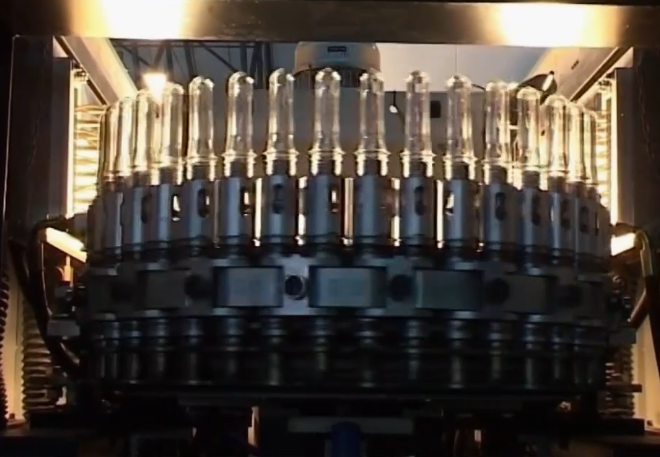
On the blow molding floor, the heating tunnel never grabs the spotlight—but it owns your uptime. If the preforms run cold, the machine backs off. If the lamps die, you lose cycles, you lose output, and you lose control of the process. For KRONES Contiform S users, the heating tunnel isn’t just a box of lamps. It’s a matched system: lamp output, reflector geometry, and temperature control all calibrated around one specific stretch blow molding window. Drop in the wrong emitter, and you aren’t just swapping parts—you’re gambling with wall thickness, crystallization, and scrap. We built our replacement lamp approach around a simple idea: the Contiform S should run the way it was spec’d, not patched together.
What matters technically: specs that match the machine, not a catalog page
A heating lamp for a Contiform S has to do more than bolt in. It has to behave thermally the way the machine was designed to run. We supply the Contiform S replacement as a true infrared emitter, engineered to the same functional envelope as the original heating-zone components. The key specs are fixed so the heating profile stays repeatable:
- **Wavelength (NIR/IR output profile):**Tuned for fast, even preform heating without scorching the surface—matched to how PET absorbs in Contiform S heating tunnels.
- **Power and voltage:**Matched to the machine’s heating-zone electrical design so the control system sees the same load behavior.
- **Mechanical envelope:**Dimensions and mounting geometry sized to the Contiform S reflector assembly so alignment stays consistent.
- **Connector and termination:**Configured for the Contiform S lamp interface—so you can replace without rewiring the tunnel.
- **Start time and thermal response:**Fast warm-up to cut the “cold start” drift that forces operators to chase settings after a lamp change. In practice, those specs translate to less preform temperature variability across the carousel, fewer heating-zone deviation alarms, and a quicker return to stable output after maintenance.
Why it works in real life: less downtime, predictable output, and costs that behave
The expensive mistake on the floor isn’t the lamp price. It’s being wrong about the lamp.
1) Downtime adds up in small, painful chunks
A lamp swap that drags turns into lost bottles. A mismatched lamp that forces re-tuning turns into scrap. Our Contiform S replacement emitters are built to drop in with the same interface as the original, so you get the heating tunnel back online faster. The target is straightforward: change the lamp, verify the profile, and run.
2) Output only matters when it’s repeatable
If lamp output drifts, preform heating drifts. Then stretch behavior drifts. Then you start seeing rejects. We control output consistency from lamp to lamp so the tunnel behaves the same after maintenance as it did before. Operators don’t have to guess a new heating window.
3) Energy use is about efficiency and control, not brute force
A lamp that wastes energy heats the tunnel more than the preform. That drives up utility cost and can push the machine into protective control actions. Our infrared emitter design focuses on efficient radiant transfer into the preform, helping the tunnel hold stable temperatures without overdriving the zone to hit the setpoint.
4) Maintenance cost is parts plus labor, every time
Cheap lamps tend to fail early, and early failures mean more maintenance windows, more spares on the shelf, and more labor hours. We design the replacement for long service under continuous Contiform S duty cycles. We have units running 5,000+ hours with less than 5% output drop in typical tunnel conditions. Fewer changes. Fewer work orders.
The installation truth: respect the machine, and the details
No replacement is “plug and play” unless you treat the system like what it is.
- **Match the whole heating zone, not just the lamp.**If reflectors are worn, oxidized, or out of alignment, even a perfect lamp will underperform. Replace lamps as a set, and inspect reflector condition at the same time.
- **Calibrate after the swap.**Even with matched output, run a quick profile check—preform surface temperature across positions—then confirm the blow molding settings are still inside the validated window.
- **Clean the lamp before it goes in.**Oil and dust on the tube change heating behavior. Handle by the base only.
- **Verify electrical integrity at the socket.**Loose contacts, corrosion, or cracked insulators cause intermittent heating errors that can look like control problems.
- **One practical constraint:**Infrared emitters are sensitive to shock and thermal cycling. They’re tough, but not indestructible. Treat them like precision components—avoid impact, and don’t hammer the tunnel with repeated, severe temperature swings. If your plant runs on Contiform S uptime, the heating tunnel deserves parts spec’d to the machine, not adapted to it. We supply replacement infrared lamps engineered to match the Contiform S heating-zone requirements—so you can replace, restart, and keep producing without second-guessing the heat.