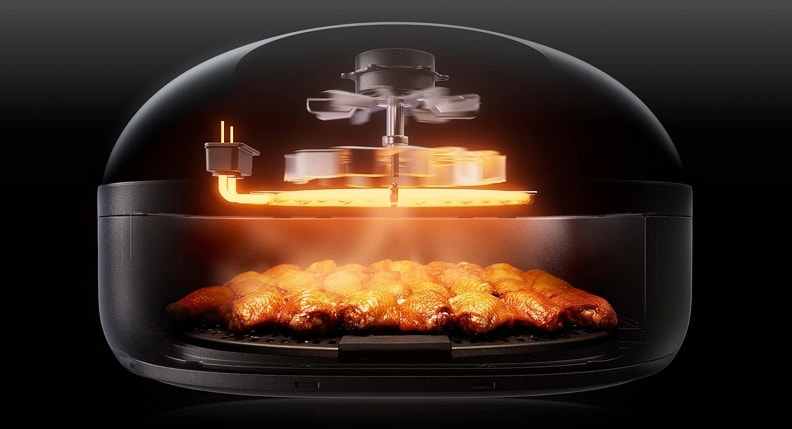
Getting the Perfect Crust: The Secret to Fast-Response IR Elements
If you’ve ever baked bread, you know the struggle. You need that sudden, intense hit of heat to get the crust to spring just right, but if the heat lingers for even a few seconds too long, you’ve just dried out your crumb. It’s a tightrope walk. That’s why we built our 110V infrared elements to be snappy.
Stop Fighting Thermal Lag
Most heaters are slow. They take forever to warm up and even longer to cool down. We hated that. To fix it, we paired a high-density tungsten filament with a low-mass quartz envelope. The result? The element hits your target temperature in seconds. And the second your controller cuts the power, the heat drops off just as fast. No more “over-baking” because your heater couldn’t stop glowing in time.
The 110V Balancing Act
Since these run on standard 110V industrial power, we had to make a choice about the filament thickness. Here’s the deal: a super thin filament reacts instantly, but it burns out way too fast if you’re cycling it constantly. A thick one lasts forever but feels sluggish. We found a sweet spot. It’s stable, it’s durable, and it doesn’t freak out when you’re flipping the power on and off every couple of minutes.
Don’t Let Your Seals Snap
Rapidly heating and cooling something is violent. The quartz expands and contracts over and over, which usually puts a ton of stress on the electrode seals. We use a specific pinch-seal technique to keep the quartz from cracking under that pressure. Just a heads-up, though: make sure your wiring is tight. Loose connectors lead to arcing, and if you aren’t using high-temp leads, you’re going to melt your insulation. It’s not pretty.
A Word of Caution
Short-wave IR is a beast. It packs a massive punch, but it can be aggressive. If you mount these elements too close to your dough, you’ll scorch the top before the middle is even warm. You’ll need to spend some time dialing in the distance and the dwell time. This isn’t a “plug it in and walk away” kind of part. You’ll want a tuned PID controller to keep those temperature swings under control. Once you get it dialed in, though? It’s magic.