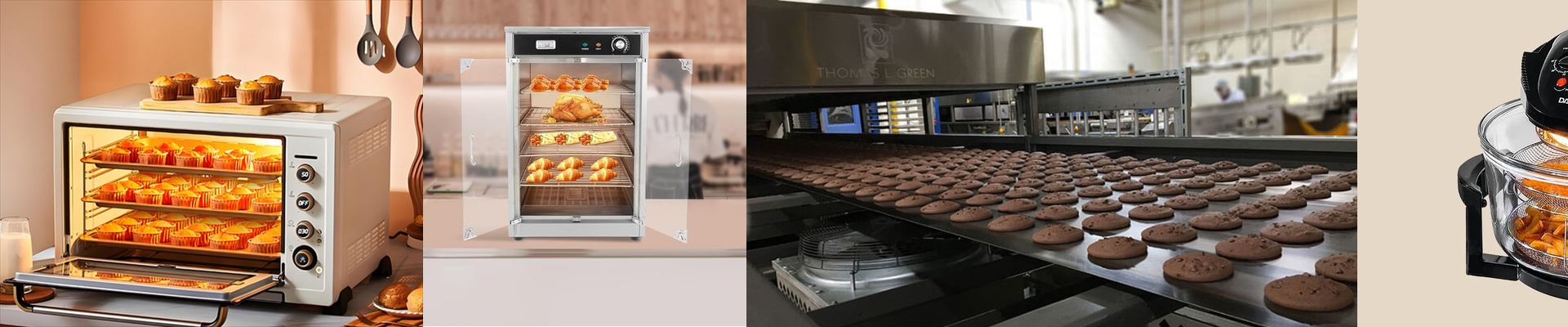
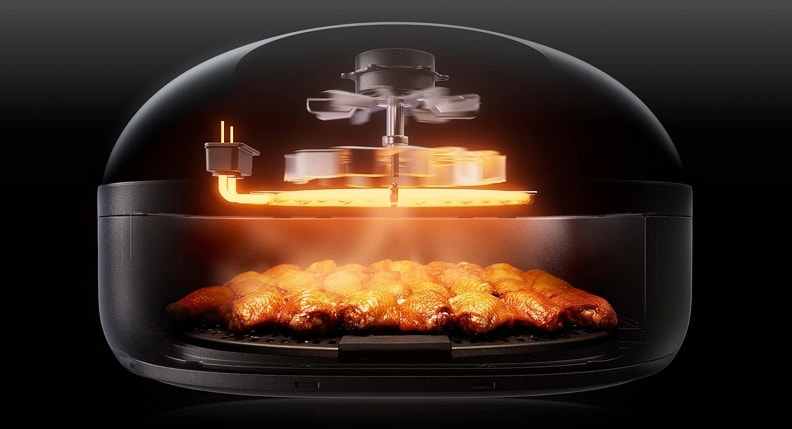
Stop the Temperature Dip: Using IR to Keep Food Actually Hot
Ever notice how a food warmer seems to lose its cool the second someone opens the kitchen door? Or maybe a cold draft hits the unit and suddenly your food isn’t at the right temp anymore. It happens because standard thermostats are slow. They wait for the air to get cold before they realize there’s a problem. By then, the food has already started to chill. We fixed this by switching to infrared (IR) heating.
Why IR actually works
Most heating coils rely on convection—basically heating the air and hoping that air heats the food. It’s a slow process. IR is different. It sends out short-wave radiation that hits the food directly. No waiting around. To keep things steady, we use an IR sensor that talks to a PID controller. Instead of waiting for the whole cabinet to cool down, the system sees a drop in surface temperature instantly. It bumps up the power right then and there. It’s fast. Really fast.
Dealing with the chaos of a kitchen
Kitchens are unpredictable. One minute it’s roasting, the next it’s freezing. Our setup uses a closed-loop system to handle that. If the room temperature drops by 5°C, the system calculates exactly how much energy is missing and fixes it in milliseconds. We built these to handle that kind of rapid switching without burning out the filaments. The result? A steady, flat temperature line, no matter where you plug the warmer in.
The tricky part (and how to handle it)
Now, you can’t just throw more power at the problem. High-wattage IR elements pack a ton of heat into a tiny space. If you go overboard without enough ventilation, you’ll end up scorching your food or melting your chassis. You have to find that sweet spot between the wattage, the insulation, and the airflow. One more tip: use a high-frequency SSR (Solid State Relay). It keeps the pulsing power from creating electrical noise. It’s the difference between a cheap mechanical switch that overshoots the temperature and a professional setup that hits the mark every single time.